What: Simulated two-phase droplet generation and ferrofluid magnetic field behavior in
microfluidic systems using COMSOL and MATLAB.
Why:
To gain experience in microfluidic CFD simulations, understand mesh-dependency analyses, and learn how to
develop physics-based models to validate experimental data.
How:
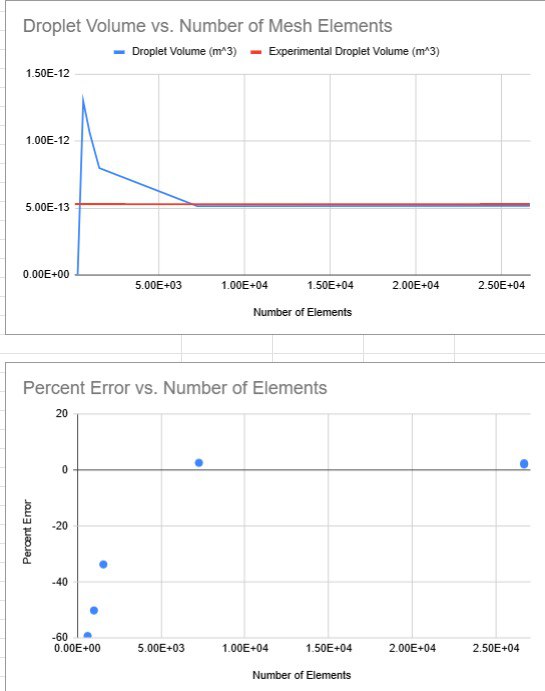
In COMSOL, I set up a two-phase level set simulation to model droplet formation in a cross-flow
droplet generator using silicone oil and a 10% glycerol–water mixture. I performed a mesh-dependency study by
varying mesh fineness across multiple iterations. For each case, I calculated droplet volume using a surface
integration at the outlet and compared results to experimental data to balance accuracy and computational
efficiency.
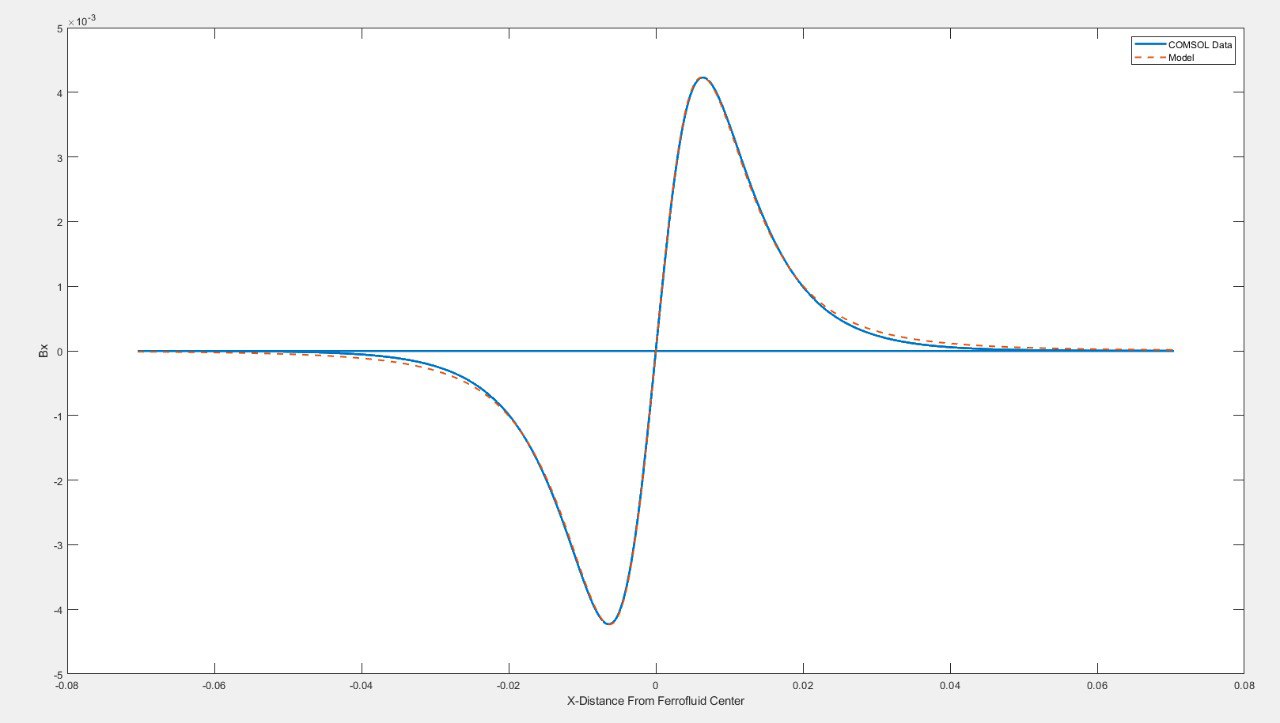
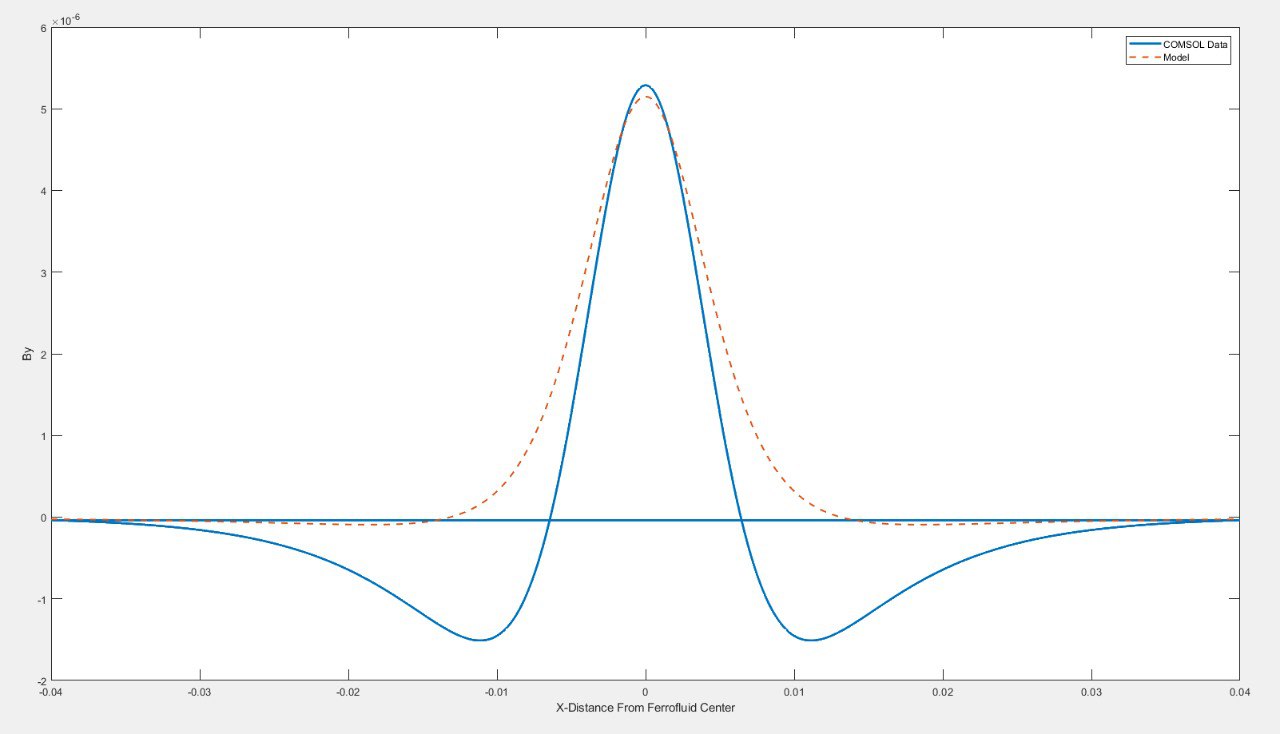
Separately, I used MATLAB to fit a physics-based model to magnetic field data across a ferrofluid in a
microfluidic chip, influenced by a permanent magnet. This model helped predict ferrofluid motion based on its
position relative to the magnet.
Results: In the end, I identified that the "finer" mesh option yielded optimal
accuracy with only
2.65% error in droplet volume. The magnetic field model successfully predicted ferrofluid behavior, enabling a
better understanding of magnetically driven flows in microfluidic chips.