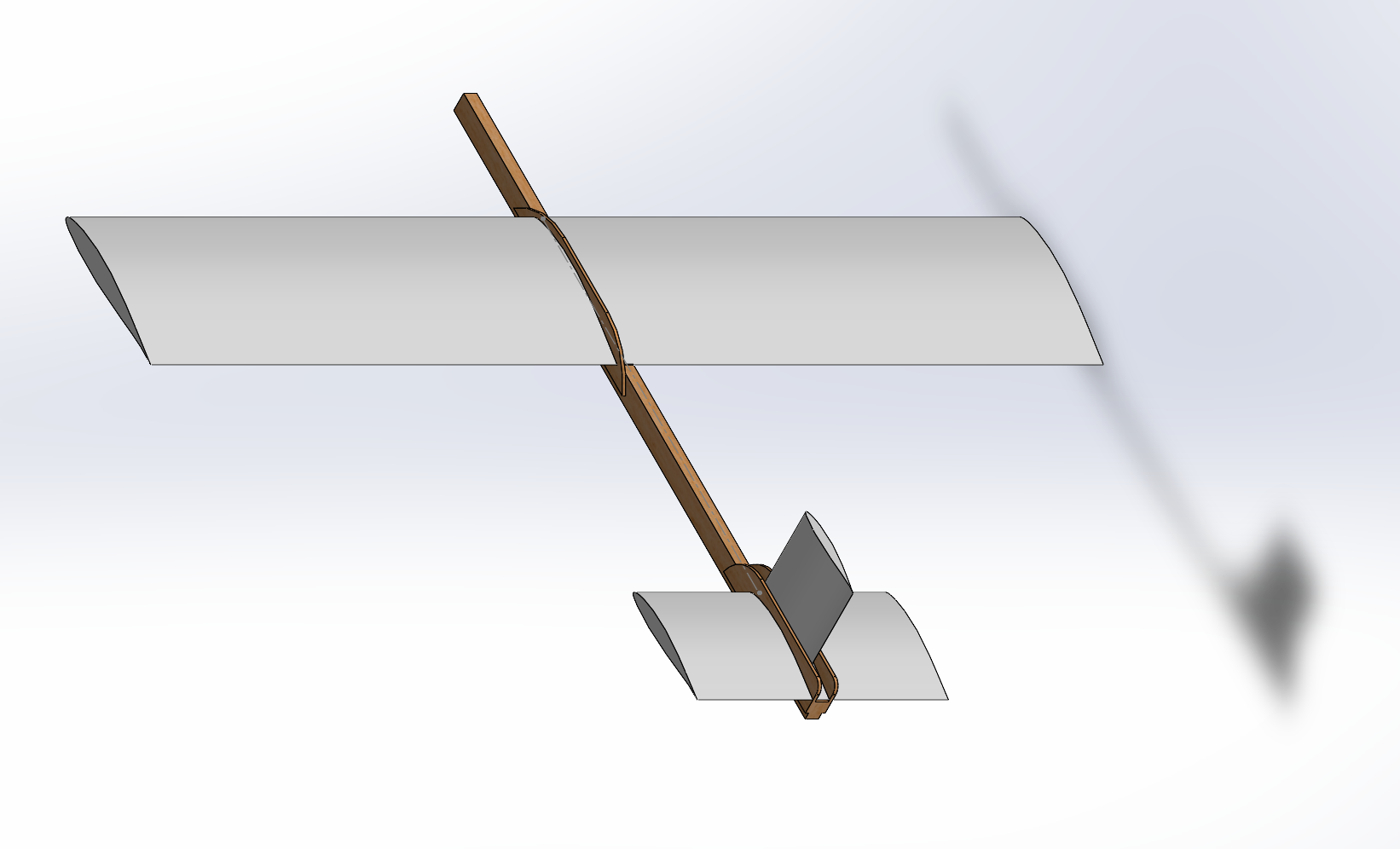

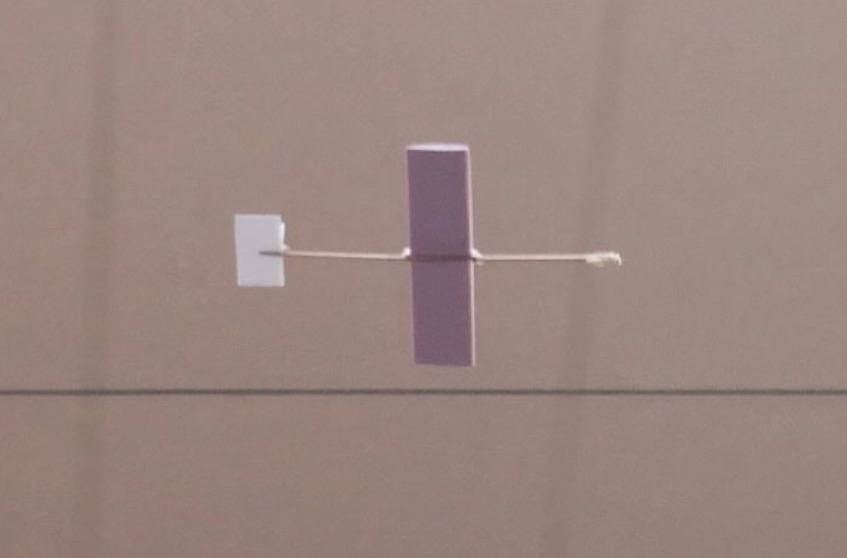
What: Designed, simulated, constructed, and flight-tested a basic 3-foot wingspan
glider.
Why:
Developed for a UCLA AIAA and Design Build Fly collaborative workshop aimed at engaging new members and
promoting interest in aviation. I was responsible for designing and prototyping the glider from scratch to serve
as the template for all workshop participants.
How: Using MATLAB, I sized the glider within a 3-ft wingspan constraint (based on
lab foam cutter limits) and designed it to fly at ~25 ft/s. A NACA 0010 airfoil was selected for all surfaces to
simplify manufacturing. Tail sizing was guided by the volume coefficients of the Tundra RC aircraft, known for
its favorable stability and handling. I used XFLR5 to calculate the neutral point, determine the required
incidence angle of the horizontal stabilizer, and assess longitudinal stability. The geometry was then modeled
in SolidWorks using airfoil data from Airfoil Tools, with a basswood fuselage (1/8 in thick) chosen for
simplicity in fabrication. CFD simulations validated the aerodynamic design, confirming a favorable pressure
gradient and no significant flow separation across the wing. The wings and tail surfaces were foam-cut, and I
laser-cut the fuselage and component mounts.
Results
In all, we were able to create a successfully stable glider that was easily emulated by ~15 people at
the glider workshop.